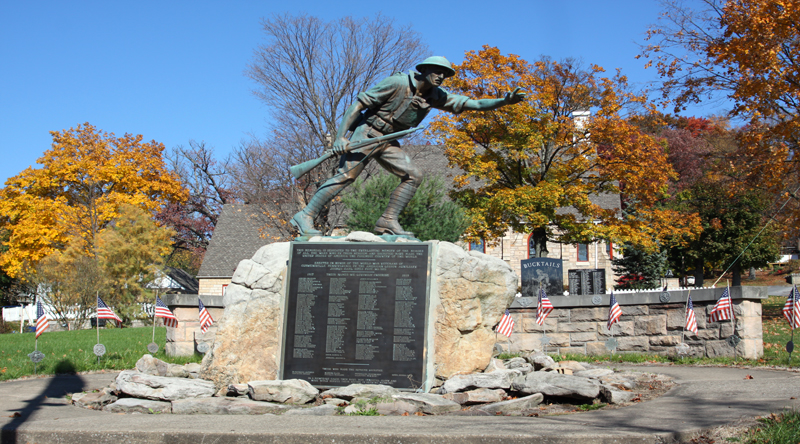
Curwensville Pennsylvania Doughboy
E. A. Irvin, businessman and famed veteran of the Civil War, owned this plot of ground and intended it to be the site of a monument to his beloved fellow “Original Bucktails” of the 13th Pennsylvania Reserve Corps. On his death in 1908 his dream had not been fulfilled. In 1924, his heirs Hugh McNeil and Elizabeth G. Irvin, gave the plot to the Borough of Curwensville for the erection of the monument. The Auxiliary of Joshua Earl Sipes American Legion Post No. 505 led the community effort to raise the funding, and the monument was dedicated on June 14, 1925. The Doughboy, symbol of the veterans of World War I—the “war to end all wars”—was chosen and dedicated to the services of all veterans; including those from the Civil War and the Spanish American War. In October 1977 the Curwensville Rescue Hose completed work on a two-year project to erect the lighted flag pole. The monument was refurbished and rededicated in 1988.
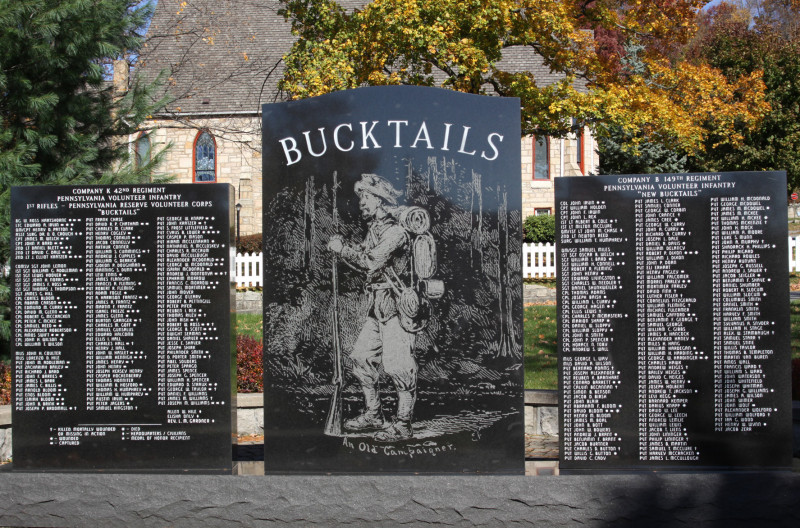
Curwensville Pennsylvania Bucktails
During the 1999 celebration of Curwensville’s Bicentennial Celebration, the late Ed Morgan, a local historian, author and journalist, rekindled the community interest in fulfilling E. A. Irvin’s dream for a Bucktail Monument. Under the leadership of the Curwensville-Pike Township Historical Society, a committee was formed in 2002 to raise the necessary funds. The monument was dedicated on October 11, 2003 with more that 300 attendees witnessing the hour - long program. The monument is made from African Jet Black Granite from Vermont. A two-year project—completed in 2005—by the late Cosmo “Gus” Guglielmi was the sitting wall. Gus, best known as a local pharmacist, was also a master stone mason. The lighting and landscaping was completed in 2006, and the monument site is maintained by the historical society. Mr. Guglielmi also owned a drug store at the home of Uptown Videos. The elegance of master stonework can be seen at this location as well.
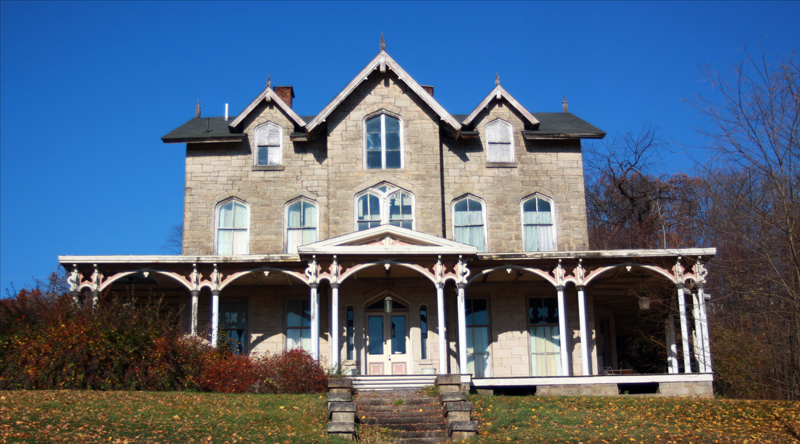
Curwensville Pennsylvania John Irvin Home
In 1862, during the second year of the Civil War, John Irvin was instrumental in recruiting Company B, 149th Pennsylvania Volunteers (“New Bucktails”). He was the host of the annual Bucktail Reunion in Curwensville in 1893. Irvin built this stately home which is at 200 State Street, made from stone quarried from the Temple Heights area, (circa 1870) as a residence for he and his future bride. Local lore is that his fiancé withdrew from the marriage and he never lived in the residence. In 1924 Hugh M. Irvin purchased the facility from the Irvin estate and presented it to the Masonic Lodge. It remained the home of the Noble Lodge No. 480, Free & Accepted Masons until 1996. In the late 1990’s it was a bed and breakfast and is now a private residence.
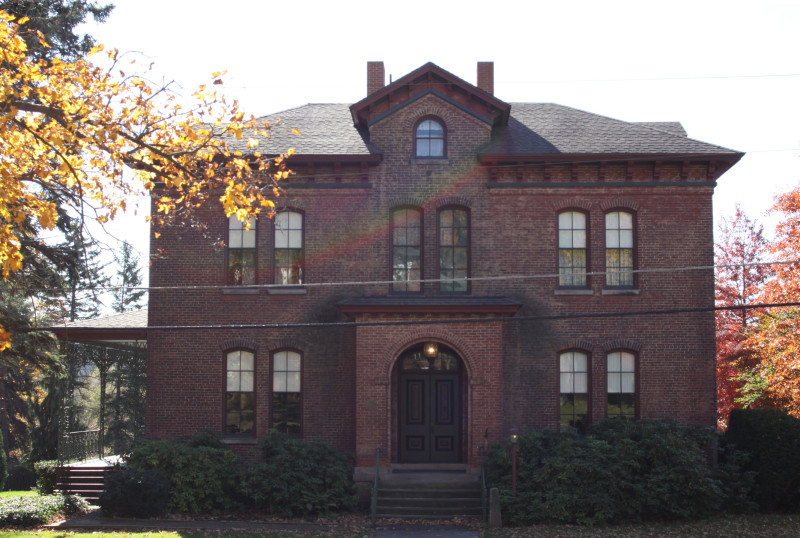
Curwensville Pennsylvania E A Irvin Childhood Home

Curwensville Pennsylvania E A Irvin Family Home
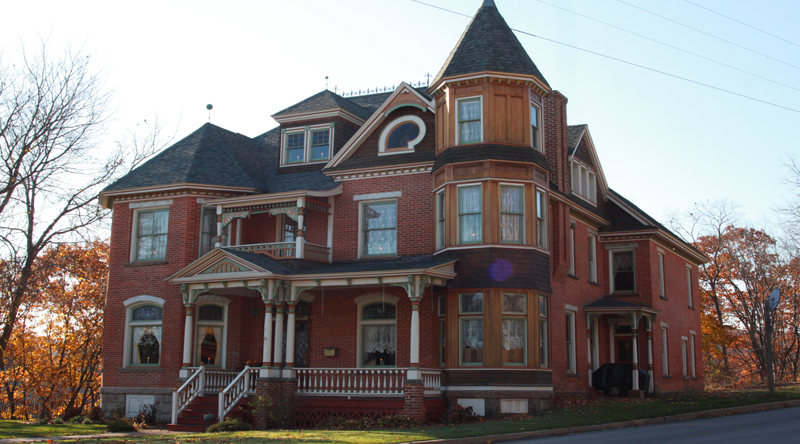
Curwensville Pennsylvania Samuel Arnold Home
This red brick and wood Queen Anne Victorian home located at 850 State Street was built at the western entrance of Curwensville in the 1880’s. Mr. Arnold operated a woolen factory in nearby Bridgeport and a mercantile store in Curwensville. Since 2002, the current owners have been historically refurbishing the home to its original appearance.
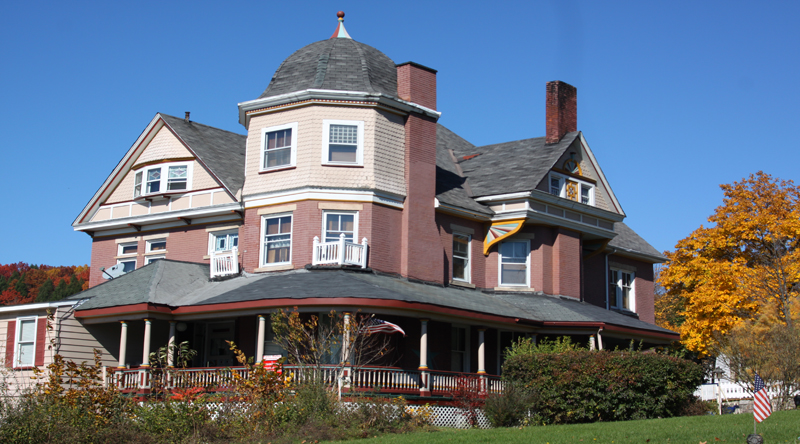
Curwensville Pennsylvania Fred J Dyer Home
FRED J DYER home (circa 1870), was the proprietor of the Fred J. Dyer & Co. store, the largest general mercantile establishment in Central Pennsylvania, together with the Fred J. Dyer & Co. mill, is one of the most enterprising and successful business men of Clearfield county and has been a resident of Curwensville for over thirty-eight years. He is a native of New England, born at Portland, Me., July 2, 1858, and is a son of W. N. and Caroline (Lovett) Dyer.
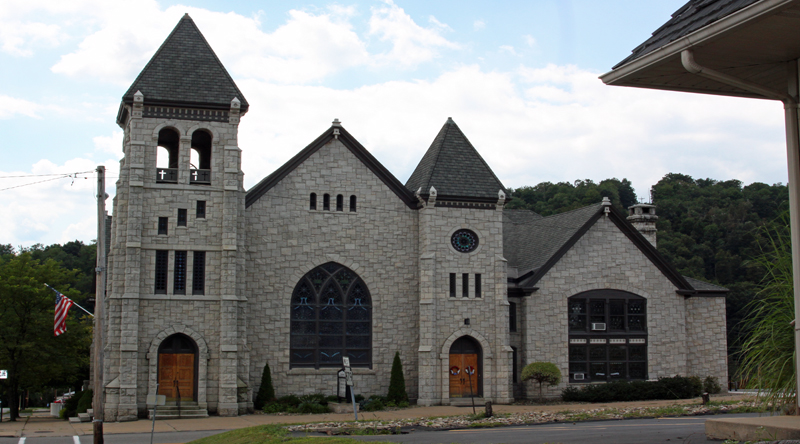
Curwensville Pennsylvania UE Methodist Church
The present Methodist Church, "Stone Church" came as the result of John Patton, a leading member of the Methodist Church, who announced that it was his desire to contribute to the building of a new "stone church", to be built of native stone from the Roaring Run Stone Quarry. The first contract was entered into with Reuben Thompson to build the church for the sum of $18,000.00. The pastor in charge was Rev. M. L. Smyser who became ill and died. Appointed in his place was Rev. J. Patton Moore, who remained as pastor until the church was built and dedicated. Sunday, August 27, 1893, the cornerstone was laid with impressive ceremonies. The building committee for the "stone church" were: H. B. Thompson, Chairman, Fred J. Dyer, Joseph R. Irvin, Frank L. Arnold, Samuel F. McCloskey, Charles E. Patton, Charles S. Russell and finally, on June 17, 1894, through their untiring efforts, the "Stone Church" was dedicated at an entire cost of $25,000.00, which had all been paid except $800.00 which was paid the day of dedication, and was presented to the congregation—debt free. During the pastorate of Rev. J. Max Lantz in 1919 the church and Sunday School were remodeled and redecorated.

Curwensville Pennsylvania Presbyterian Church
The Curwensville Presbyterian Church is the oldest congregation in Clearfield County: first meeting in 1803, and constructing the first church building in the County in 1809, by McClure’s Cemetery. In 1843, the congregation moved to downtown Curwensville, and a simple wood structure was built that also housed the town school. Five years later, the congregation formally changed its name from Pike Presbyterian to the Curwensville Presbyterian Church. The current sanctuary was dedicated in 1869. It was built from local stone from around Temple Heights. It contains Tiffany stained glass windows with gold stenciling on the walls and ceiling. The interior was patterned after the Chapel of Flowers in Scotland. The original structure was expanded in 1903 and the building was partially destroyed by fire in 1937. During repair
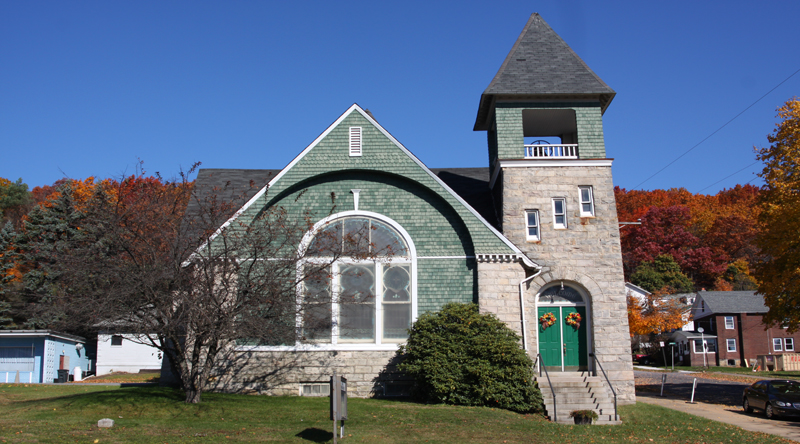
Curwensville Pennsylvania Grace Lutheran Church
Sunday, May 19, 1901 was a day long remembered, not only by the pastor and people of Grace Lutheran Church, but by all our churches and the community in general, as a day of rejoicing in the completion and dedication of the fine church building, corner of State and Pine Streets. Rev. B. S. Dise, who organized the congregation on March 13, 1898, preached his first sermon in the Friends Meeting House on Tuesday evening, November 24, 1896. Not, however, until October 24, 1897, were regular services begun and held every two weeks, first in the Golden Eagle Hall, then in the Knights of Pythias Hall, until the lecture room of the church was dedicated on December 17, 1899, the corner stone of building having been laid on September 17, 1899. The pastor moved here from Mahaffey, Pa. January 1, 1899 and then devoted all his efforts to this one place. The art glass windows made by C. Day Rudy & Co. of Harrisburg were presented by or in honor of the following: John Stephen Graff and Katherine Graff. George Kittleberger and Louisa Kittelberger, Jacob Bilger and Hannah Bilger, William Fox Eckbert and Anna Eckbert, Henry B. Walter and Annie E. Walter, Ladies Aid Society, Mrs. B. S. Dise and the rose window in rear of pulpit in memory of Rev. C. P. Harrah, a classmate of Rev. Disc, presented by the Lutheran Church of Roaring Spring, whose first pastor he was.
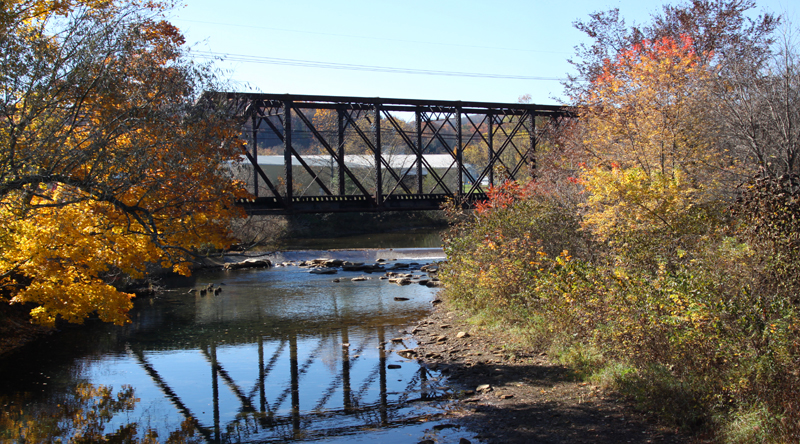
Curwensville Pennsylvania Anderson Creek
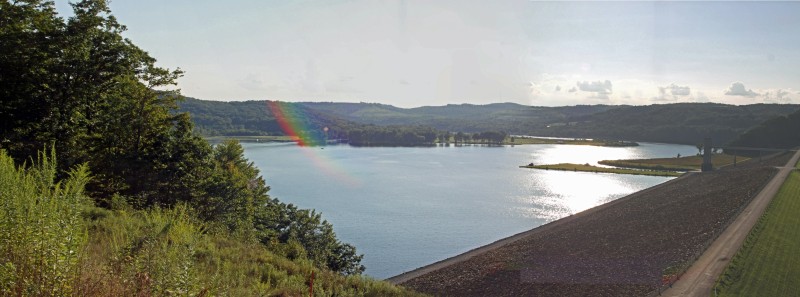
Proudly We Stand
More